

5 Reasons When Should You Choose LEXAN PC Film Over Conventional Plastic Films
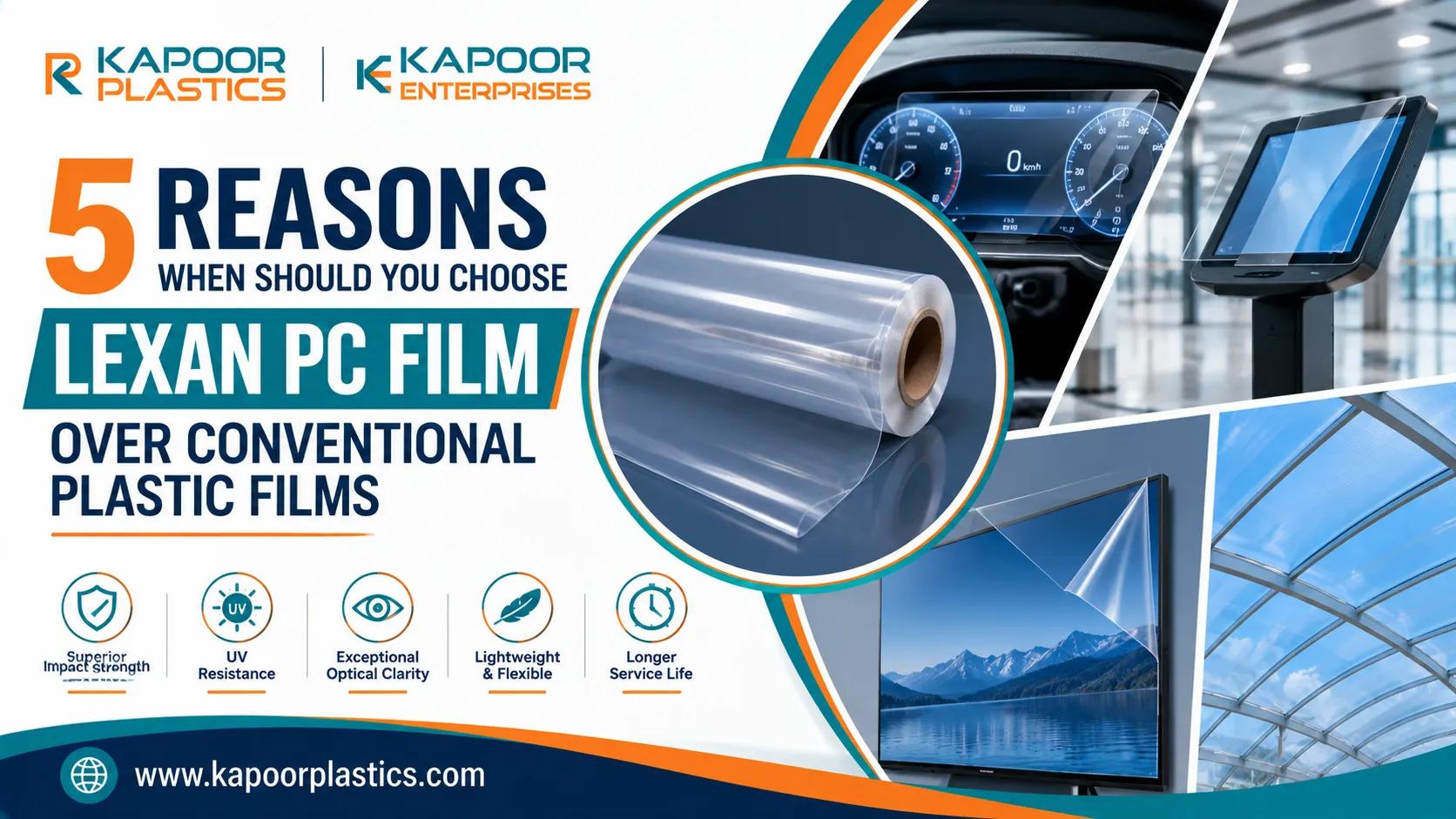
Choosing the right film material can directly affect the durability, appearance, safety, and performance of a finished product. Conventional plastic films may work for basic applications, but demanding industrial and commercial environments often require a material with greater mechanical and thermal performance. This is where LEXAN™ polycarbonate film can offer a practical advantage.
For businesses comparing plastic film options, here are five reasons to consider LEXAN™ PC film for applications where standard films may not provide sufficient performance.
1. Better Resistance to Impact and Handling
One of the primary advantages of polycarbonate is its high impact resistance. LEXAN™ PC film is designed for applications where the film may experience handling, abrasion, bending, or mechanical stress. This makes it suitable for industrial labels, overlays, displays, control panels, and protective applications where maintaining the film's integrity is important.
Compared with many conventional plastic films, polycarbonate provides a stronger material base for demanding applications.
In manufacturing environments, films can be exposed to repeated handling during assembly, installation, transportation, and everyday use. A film that cannot withstand these conditions may become damaged, distorted, or visually compromised over time. Selecting a material with better mechanical performance can therefore help manufacturers maintain the reliability and appearance of the finished product.
LEXAN™ polycarbonate film can also be considered where the film needs to retain its shape and functional properties during regular use. This is particularly relevant for overlays, labels, displays, and control interfaces that are frequently touched or handled. Depending on the selected grade and application, polycarbonate film can provide a useful balance between flexibility, strength, and durability.
For industrial product manufacturers, choosing the right film at the design stage can also help reduce the risk of premature replacement caused by physical damage.
2. Anti-Scratch Options for Long-Term Surface Performance
For applications where the surface is frequently touched or exposed to rubbing, an ordinary film may develop scratches that affect its appearance. Anti scratch polycarbonate films are available for applications requiring improved surface durability.
These films can be considered for control panels, instrument displays, equipment interfaces, labels, and other products where maintaining a clean and professional appearance is important. Choosing a suitable hard-coated LEXAN™ film can help improve resistance to surface damage and extend the useful appearance of the finished product.
Surface durability becomes especially important in applications where the film is part of a visible interface. Control panels, electronic equipment, industrial instruments, and consumer-facing products may be cleaned, touched, or handled repeatedly. Even when the underlying product continues to function correctly, visible scratches can make it appear worn or poorly maintained.
A suitable hard-coated film can provide an additional layer of surface protection while maintaining the required visual and functional characteristics. Manufacturers should nevertheless select the grade according to the actual operating conditions, including the expected level of abrasion, cleaning method, environmental exposure, and required optical performance.
For businesses comparing conventional plastic films with specialized LEXAN™ PC film, scratch resistance can therefore be an important factor when long-term appearance and usability matter.
3. Suitable for Applications Requiring Fire Performance
Fire safety can be an important consideration when selecting a polymer film for electrical, electronic, transportation, and industrial applications. Specialized fire retardant polycarbonate film grades are designed for applications where flame performance is an important material requirement.
Rather than selecting a general-purpose plastic film, manufacturers can evaluate specialized polycarbonate grades according to the applicable fire-performance requirements of their end product.
This is particularly relevant for components used around electrical and electronic systems, where material selection may need to consider the possibility of heat generation or exposure to elevated temperatures. Transportation and industrial applications can also have specific material requirements depending on the equipment, environment, and applicable standards.
Fire-retardant polycarbonate film should not be selected simply because it is labelled as fire resistant. The exact grade, test standard, thickness, construction, and end-use conditions should be reviewed with the supplier and relevant technical documentation before final selection.
By evaluating these requirements at the product-development stage, manufacturers can select a film that is better aligned with the performance expectations of the finished application.
4. Greater Design and Fabrication Flexibility
LEXAN™ PC film is available in different grades, thicknesses, surface finishes, and optical characteristics. This flexibility allows manufacturers and product designers to select a film according to the application's functional and aesthetic requirements.
Polycarbonate film can be used for graphic overlays, membrane switches, labels, instrument panels, decorative surfaces, and electronic interfaces. Depending on the selected grade, it can also support printing and forming processes used in product manufacturing.
This design flexibility can be useful when a single material needs to combine functional performance with a specific visual appearance. For example, a product designer may require a transparent film for a display, a textured surface for improved visual effect, or a printable surface for graphics, symbols, instructions, or branding.
Different surface and optical options can help manufacturers create products that are not only functional but also visually consistent with their overall design. Film selection can also influence how graphics, text, symbols, and colours appear after printing.
Fabrication requirements should be considered alongside the final application. Factors such as forming method, printing process, thickness, surface finish, and dimensional requirements can influence which LEXAN™ film grade is appropriate. Working with an experienced supplier can make this selection process easier and help avoid choosing a film based only on price.
5. Get Product Guidance from a Reliable LEXAN PC Film Dealer
Selecting the correct film involves more than comparing thickness or LEXAN PC film price. The required surface finish, transparency, colour, thickness, flame performance, scratch resistance, forming requirements, and application environment should all be evaluated before ordering.
Kapoor Plastics is a LEXAN PC film dealer in India supplying LEXAN™ polycarbonate film for industrial and commercial requirements. For customers specifically looking for a LEXAN PC film dealer in Delhi, Kapoor Plastics can assist with product selection based on application and specification requirements.
If your project requires anti scratch polycarbonate films, fire-retardant grades, or other specialized LEXAN™ PC film solutions, discussing your technical requirements with an experienced supplier can help you choose the appropriate film instead of relying on a conventional plastic film that may not meet the application's performance demands.
A reliable supplier can also help buyers understand the differences between available grades, thicknesses, finishes, and performance characteristics. This is useful when the application has specific requirements that cannot be addressed by a standard general-purpose film.
Before placing an order, buyers should ideally define how the film will be used, what type of environmental exposure it will experience, whether it will be printed or formed, and what level of surface, optical, mechanical, or fire performance is required. These details can help narrow down the available options and make product selection more practical.
Making the Right Choice Between LEXAN™ PC Film and Conventional Films
Conventional plastic films can remain suitable for applications with basic performance requirements. However, when a product requires better impact resistance, improved surface durability, specialized fire performance, or greater design and fabrication flexibility, LEXAN™ PC film can be a more suitable option.
The right choice ultimately depends on the specific application rather than simply selecting the most advanced or highest-priced film available. By considering performance requirements, fabrication processes, appearance, environmental conditions, and long-term usage, manufacturers can identify a film solution that provides the required balance of functionality, durability, and design.
For industrial and commercial applications, evaluating these factors before purchasing can help prevent material-selection issues and ensure that the selected LEXAN™ polycarbonate film is appropriate for the intended end use.